
How to Seal Your Roofline Against Roof Rats in Northeast Houston

To permanently exclude roof rats from Northeast Houston homes, install 1/4-inch 26-gauge galvanized steel hardware cloth over roof returns and soffit vents, cap lead plumbing roof stacks, and seal AC line chases with copper mesh and polyurethane sealant.
The Roof Return: Northeast Houston's Primary Rodent Gateway
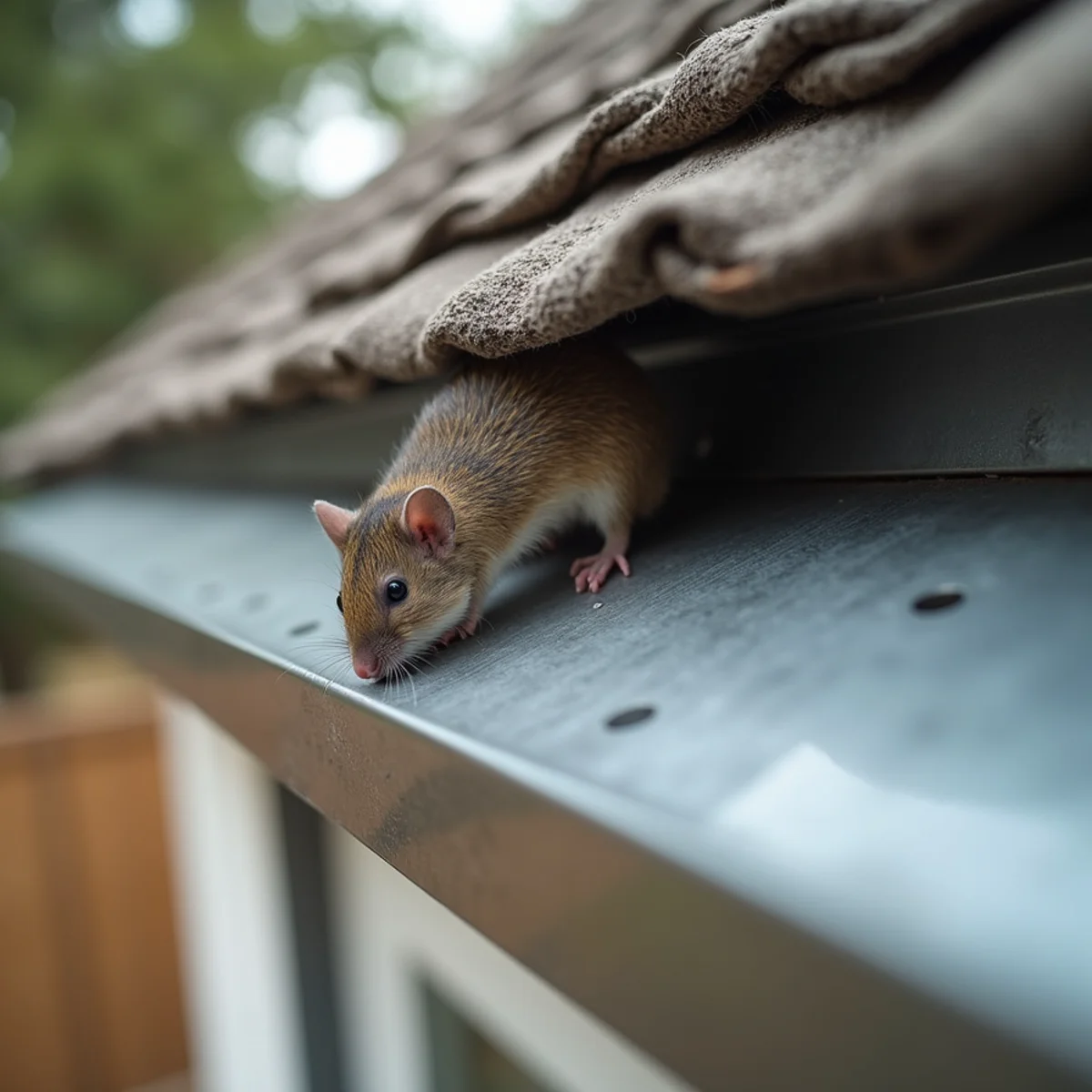
Setting snap traps in your attic may catch a few offending rodents, but as long as your roofline contains open architectural gaps, new roof rats (Rattus rattus) will replace them within days. In Kingwood, Humble, Spring, and Atascocita, permanent rodent control is fundamentally a structural engineering challenge known as 'exclusion'—physically sealing every gap larger than a quarter inch so rats cannot enter.
By far the single most common entry point in Texas residential construction is the 'roof return' (also called an eave return or bird stop). This is the architectural junction where the sloped roof rake meets a horizontal exterior wall corner. Framing carpenters routinely leave a 1- to 3-inch triangular void beneath the bottom shingle edge and the top course of brick veneer.
To a roof rat scampering along a privacy fence or pine branch, this dark void provides a direct, sheltered tunnel leading straight into your attic's blown-in fiberglass insulation, safe from owls, hawks, and neighborhood cats.
Five Critical Roofline Breach Zones to Inspect
A comprehensive roofline exclusion inspection evaluates five specific building components where builder tolerances and weather aging create entry opportunities:
- Fascia-to-Drip Edge Gaps: Where asphalt shingles overhang the roofline, warping or poorly nailed wooden fascia boards create horizontal gaps between the plywood roof deck and aluminum drip edge. Roof rats easily chew through soft wood to widen these seams.
- Lead Plumbing Vent Jacks: Texas roofing codes utilize soft lead boots to flash sewer plumbing vents penetrating the roof deck. Roof rats crave calcium and salt, aggressively gnawing completely through 1/8-inch lead sheet metal to drop straight down into attic wall voids.
- Continuous Soffit Vent Seams: Modern vinyl and aluminum perforated soffits are clipped into lightweight J-channels. Strong winds and heavy squirrels pop these panels out of alignment, allowing rats to slip behind the exterior siding.
- Ridge Vent End Plugs: Shingle-over plastic ridge vents running along the roof peak feature foam or plastic mesh end plugs. Weathering and UV exposure disintegrate these foam plugs, leaving open tunnels into the attic peak.
- Masonry AC Refrigerant Chases: Where copper line sets exit exterior brick, installers often leave gaps behind trim plates that connect directly to interior wall chases.
Need Immediate Guidance for Your Home?
Our local Humble coordination team is ready to answer questions and schedule on-site evaluations.
Materials That Rats Cannot Chew Through
Understanding rodent anatomy explains why standard hardware store repair materials fail miserably. A rat's incisors possess an enamel hardness rating of 5.5 on the Mohs scale—harder than copper, lead, iron, and structural lumber. Their jaws exert an astonishing biting pressure exceeding 7,000 pounds per square inch.
The Expanding Foam Blunder: Homeowners frequently try to seal rodent holes with canned expanding polyurethane foam (Great Stuff). Cured spray foam is soft, cellular plastic; a hungry roof rat will chew through a 4-inch plug of spray foam in less than five minutes, using the shredded foam for nesting material.
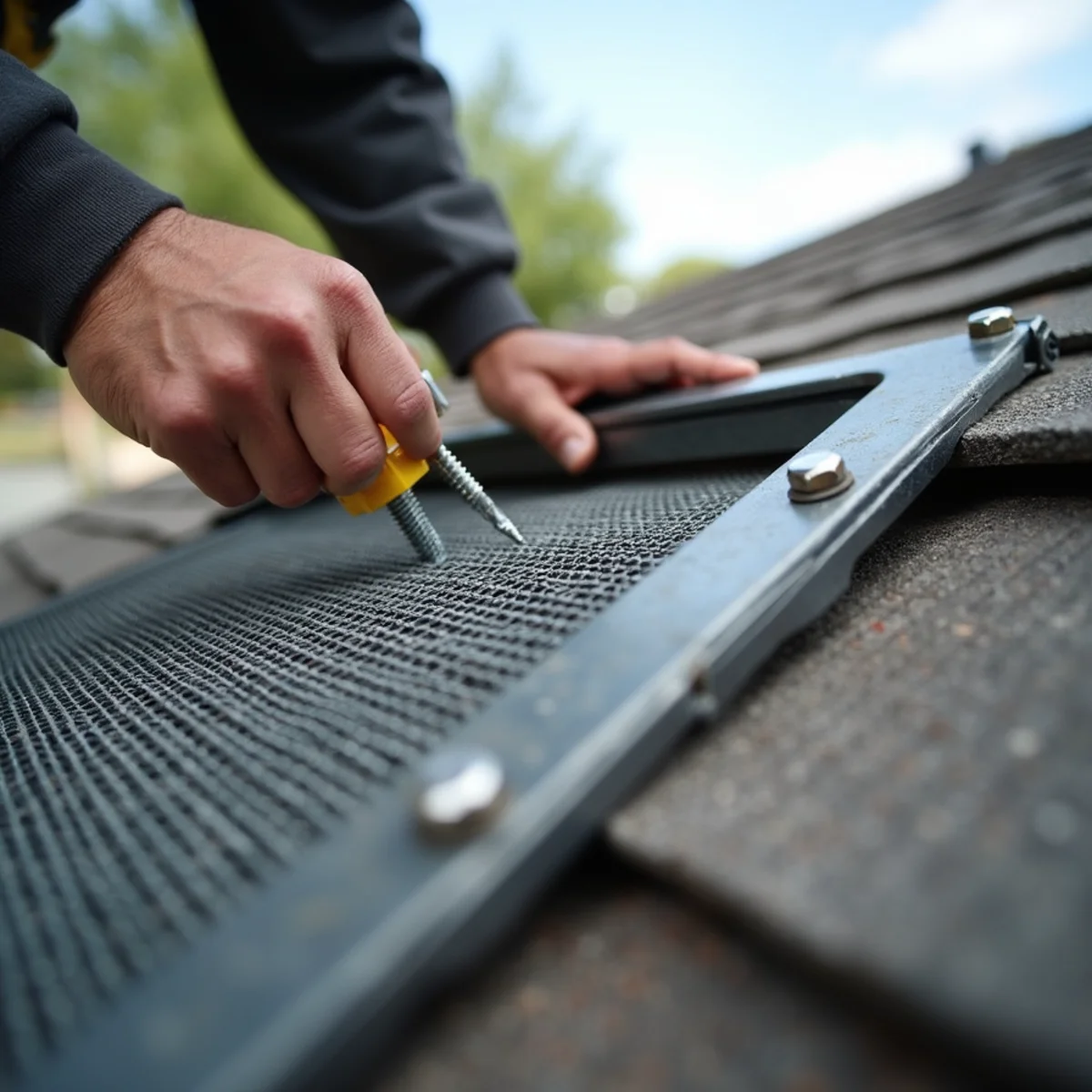
Chew-Proof Specifications: Permanent exclusion demands industrial materials that defeat rodent teeth: 23- to 26-gauge hot-dipped galvanized steel hardware cloth with a 1/4-inch square mesh pattern, custom-bent 26-gauge sheet metal flashing, pure copper mesh (Stuf-fit) which never rusts, and hybrid polyurethane or elastomeric polyether sealants that cure to a rock-hard, UV-stable rubber.
Step-by-Step Roofline Exclusion Protocol
Executing a permanent exclusion program requires a methodical sequence of structural carpentry and pest remediation:
Phase 1: Complete 360-Degree Perimeter Ladder Audit: Technicians inspect every linear foot of eaves, gables, dormers, and chimney flashings, marking rub marks (dark oily sebum stains left by rodent fur) with chalk.
Phase 2: Custom Sheet Metal Fabrication: For roof returns and complex rake transitions, technicians measure and hand-brake 26-gauge aluminum or galvanized flashing painted to match the homeowner's trim color, securing panels with self-tapping hex-head screws with neoprene washers.
Phase 3: Lead Jack Chimney Caps: Install stainless steel or heavy wire mesh spark arrestors over all roof-penetrating plumbing stacks to eliminate vertical entry without restricting sewer venting.
Phase 4: Interior Attic Trapping & Sanitization: Never seal a home without immediately setting commercial snap traps and monitoring stations in the attic. Once all exterior doors are sealed, trapped rodents must be systematically removed within 48 to 72 hours before they cause panic damage.
Environmental Risk Mitigation: Canopies and Fence Bridges
Roof rats are arboreal creatures that spend 90% of their lives elevated above ground level. They utilize overhanging tree branches, creeping fig ivy, and wooden privacy fences as high-speed elevated transit highways directly onto your roof.
Maintain Arboricultural Clearance: Prune all tree branches (especially mature live oaks and loblolly pines in Kingwood and Atascocita) back at least 6 to 8 feet from the roofline and gutters. Roof rats can jump 3 to 4 feet horizontally, but an 8-foot clearance creates an impassable aerial barrier.
Sever Utility and Vine Bridges: Trim heavy vines, bougainvillea, and English ivy completely off exterior brick and siding. Ensure overhead cable and fiber-optic utility drops are fitted with downward-sloping cone rodent guards if trees cannot be pruned.